
Nylon mesh applications vary in mesh size
The nylon mesh is fine and transparent and looks very nice. Food grade nylon 66, truly non-toxic and odorless. High temperature resistance, stagnation resistance, oil resistance, corrosion resistance, strong alkali resistance and weak acidity, and stable chemical properties. I believe everyone does not know that nylon mesh has a lot of mesh. The size of the holes that look different is not the same, which also determines the field of use will be different.
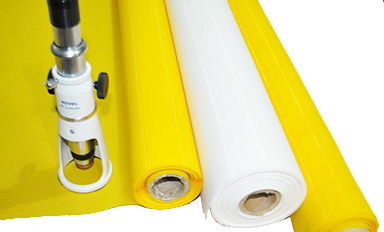
Nylon mesh has the following characteristics: nylon mesh ink surface lubrication, good gas permeability, can use large viscosity ink particles, can get accurate print pictures; the use of fine mesh woven mesh, suitable for thin line drawing and dot printing; Flexible, with appropriate softness, good adaptability to substrates, convex curved printing; tensile strength, firmness, flexibility and conflict, long service life; acid, chemicals and organic solvents, good function Simple regeneration, especially because the base has strong resistance.
Different mesh sizes are used for different applications in the screen printing process. The grid size is measured by how many grid lines per square inch. For example, a 110 mesh screen has 110 threads per square inch of intersection. The higher the number of grids, the thinner the threads and holes on the screen. The size of the grid is related to how detailed your image is and how thick the ink you are using. If you have a very high detail of the image, a lower grid screen will not keep the high detail. Thin lines or small dots in the image will only land on the holes in the grid and will not give you the correct image representation. If you are using thinner inks, the ink will also flood through the larger holes onto your shirt or substrate to make your image blurry ink bleed. On the other hand, if you try to print a thicker ink (like white) through a high mesh screen, almost no ink will pass through the screen. You will notice that different companies have different sizes available. If the grid count is quite close, such as the difference between 155 and 156, 196 vs. 200, or 81 vs. 86, the difference is so trivial and small that it won't be in your end result. Since there are many variables in screen printing, we can't tell you exactly what the grid size is. However, we can give you a rough outline and what size to use for certain types of printing.
There will be some differences in the manufacturing process of different mesh numbers, and the use will be different. Their common feature is appropriate softness and flexibility. Has good resistance.
Nylon mesh has the following characteristics: nylon mesh ink surface lubrication, good gas permeability, can use large viscosity ink particles, can get accurate print pictures; the use of fine mesh woven mesh, suitable for thin line drawing and dot printing; Flexible, with appropriate softness, good adaptability to substrates, convex curved printing; tensile strength, firmness, flexibility and conflict, long service life; acid, chemicals and organic solvents, good function Simple regeneration, especially because the base has strong resistance.
Different mesh sizes are used for different applications in the screen printing process. The grid size is measured by how many grid lines per square inch. For example, a 110 mesh screen has 110 threads per square inch of intersection. The higher the number of grids, the thinner the threads and holes on the screen. The size of the grid is related to how detailed your image is and how thick the ink you are using. If you have a very high detail of the image, a lower grid screen will not keep the high detail. Thin lines or small dots in the image will only land on the holes in the grid and will not give you the correct image representation. If you are using thinner inks, the ink will also flood through the larger holes onto your shirt or substrate to make your image blurry ink bleed. On the other hand, if you try to print a thicker ink (like white) through a high mesh screen, almost no ink will pass through the screen. You will notice that different companies have different sizes available. If the grid count is quite close, such as the difference between 155 and 156, 196 vs. 200, or 81 vs. 86, the difference is so trivial and small that it won't be in your end result. Since there are many variables in screen printing, we can't tell you exactly what the grid size is. However, we can give you a rough outline and what size to use for certain types of printing.
There will be some differences in the manufacturing process of different mesh numbers, and the use will be different. Their common feature is appropriate softness and flexibility. Has good resistance.
Hear our news first
Want to hear our news as it happens, and be the first to see our most exciting stories? Subscribing to our news releases and newsletters including Snapshot will give you the latest info.